Biomimicry in Science Block
Close observation of the natural world is a long-running thread at Long-View. We cultivate this habit in Campfires about plants, animals, and other natural phenomena; in the field notes and experiments from biology-focused science blocks; in nature writing units and small moment stories set outside; and of course, in our daily walks to Pease Park, where we watch birds, splash around to get a closer look at the turtles and other denizens of Shoal Creek, and relax in the shade of majestic live oaks.
This spring, learners in Mint and Persimmon Bands are putting these observational skills to work in a unit focused on biomimicry, with a challenge to design something for the human world that is inspired by the functions of other living things.
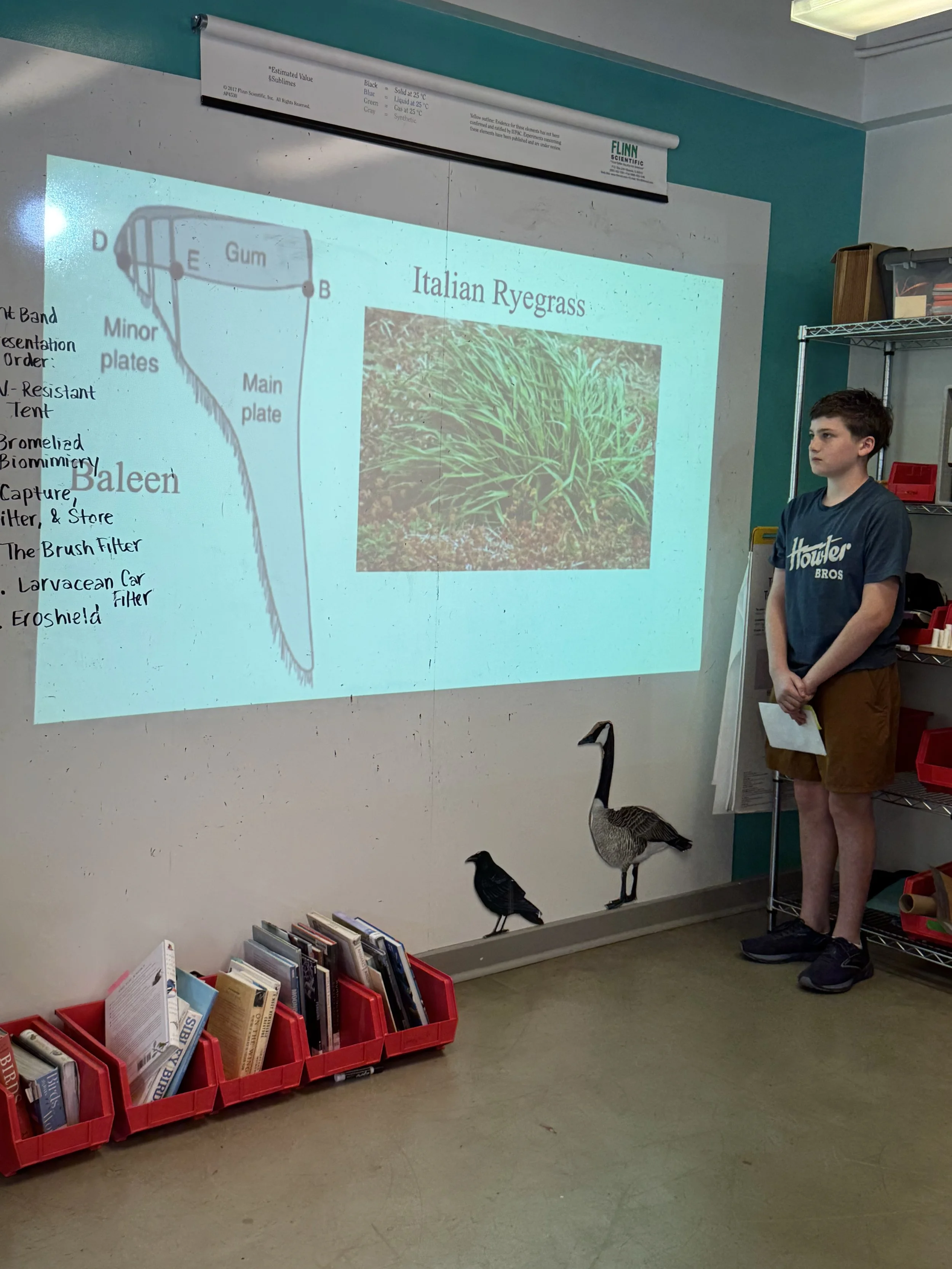
At the beginning of the unit, small groups collaboratively investigated the causes and effects of a UN Sustainable Development Goal that they felt passionate about. Groups decided on aspirational goals, criteria, and constraints for a potential design solution to the problem of their choosing. Next, they explored how nature has solved similar problems by matching the function of their design to organisms that have similar abilities.
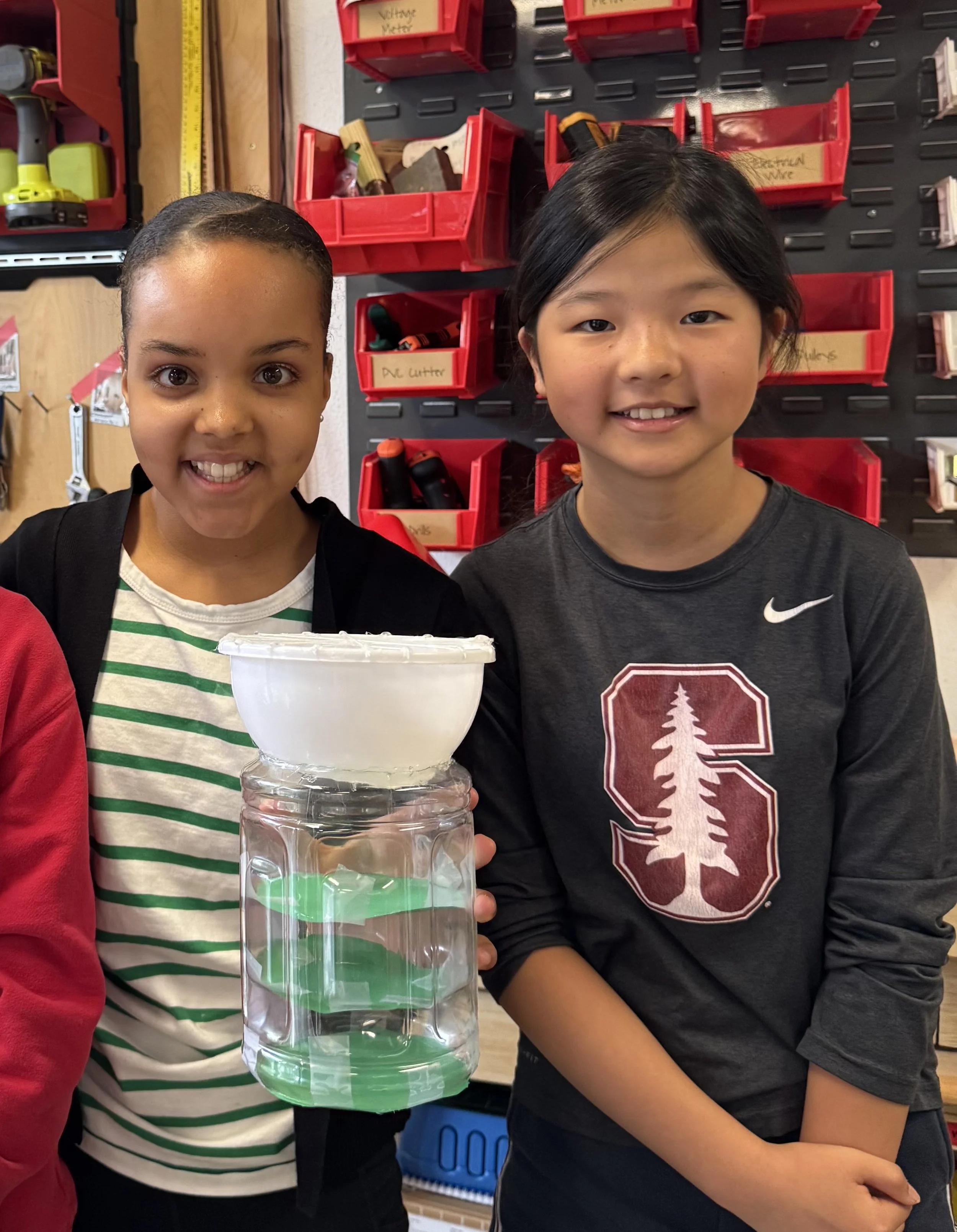
Slowing down the design process to allow for higher quality and deeper learning is a hallmark of units like this one at Long-View. In this instance, learners ideated for several weeks before thinking about potential design solutions. Using AskNature, groups identified a primary “design mentor” from a variety of living systems, and then researched their design mentor more deeply on a field trip to the central library (which we got to via a short trip on a city bus—another Long-View tradition). As learners began to prototype, they refined and iterated their solutions by evaluating their strengths and weaknesses. In this way, they gained understanding of systematic processes for evaluating solutions with respect to how well they meet the criteria and constraints of a problem.
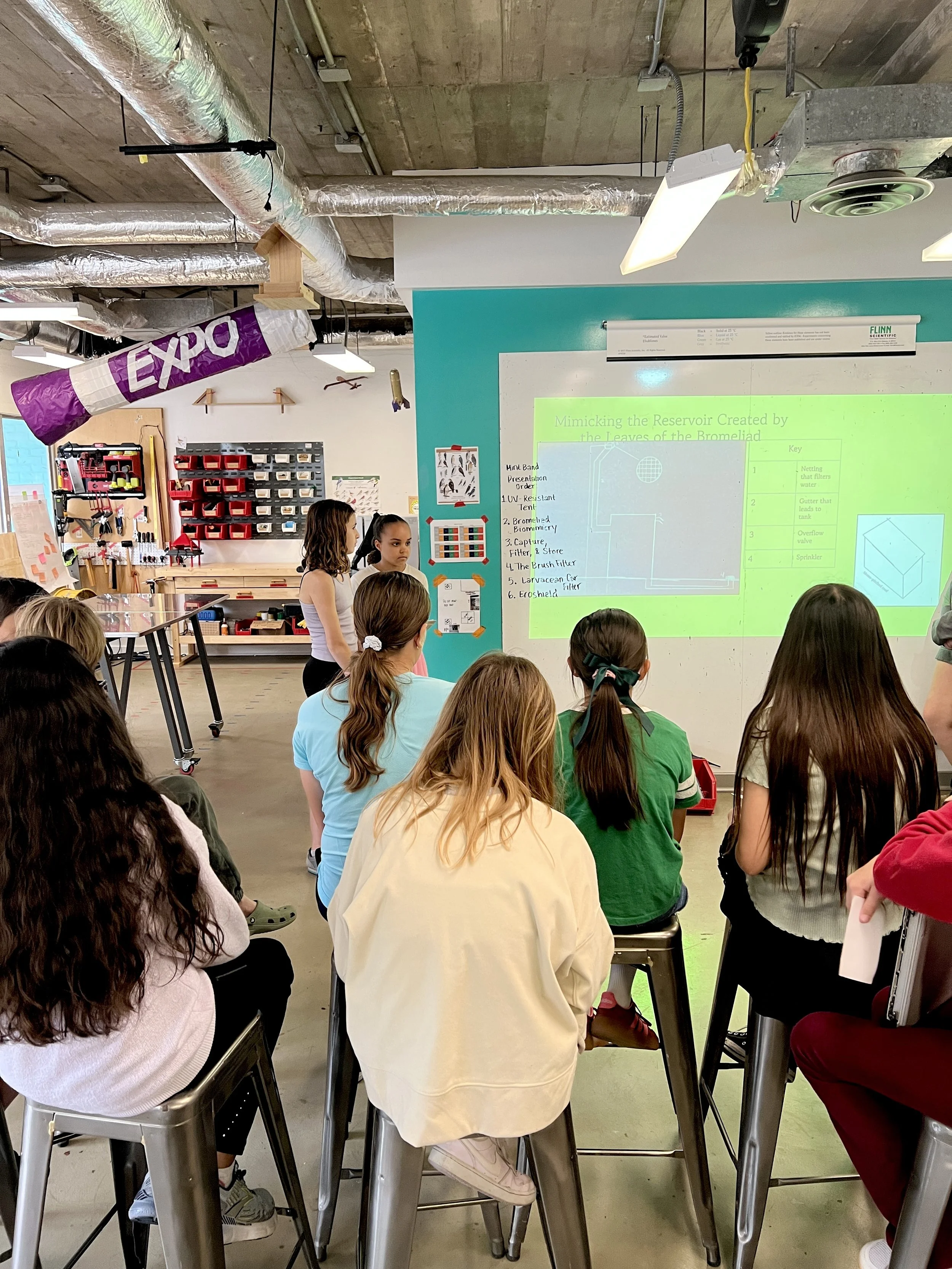
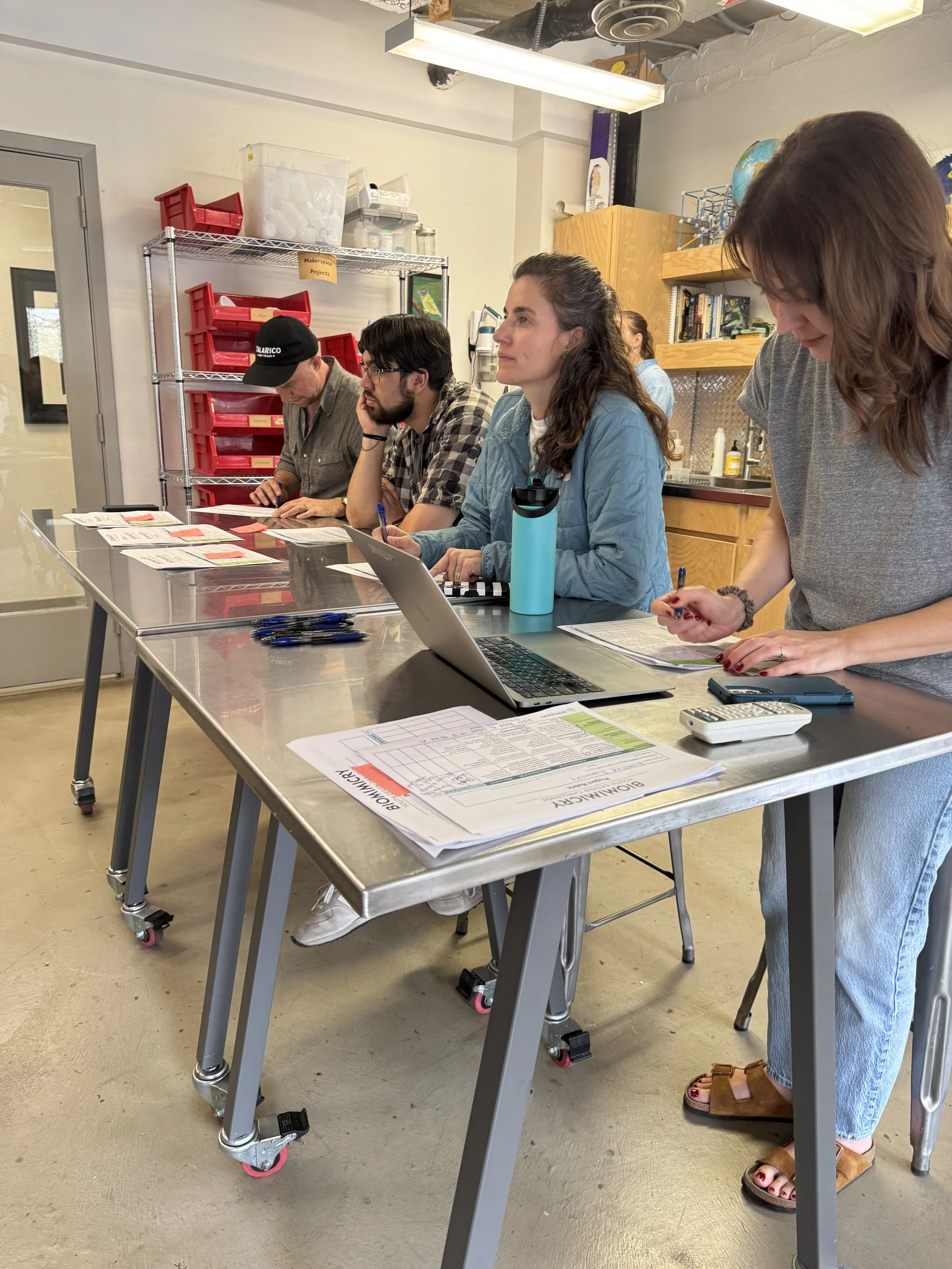
Now near its end, the unit will culminate with learners creating both a portfolio and a two-minute video to submit to the Biomimicry Youth Design Challenge. Learner projects at Long-View have taken a variety of fascinating directions. One group in Persimmon Band is designing a transportation system that mimics the mycorrhizal networks between trees; another takes a railroad worm as inspiration for creating screens that emit red light, instead of blue.
While we typically do not teach the same units from year to year, teachers at Long-View often return to especially compelling content after a year or two with fresh eyes for new iterations. The Biomimicry unit is a great example of this tendency; Ms. Winchester originally developed it in 2020, with an emphasis on climate science; she brought it back in 2023, and Mr. Cooley also taught a version with the bands he taught that year. This time, Ms. Winchester’s bands focused on the evolution of traits with an emphasis on biological structures and their functions. A learner in Mint Band reflected that she perceives the world differently, since beginning this unit. “Now when I look at a tree,” she said, “I wonder why it takes that particular form?”