Build Week 20: Create a Constitution
Build Weeks at Long-View are a chance to expand our academic studies or try out new skills; they typically focus on one, rich challenge, involve experts from the larger community, and call for higher levels of reasoning and discourse. Our first Build Week of the year just concluded and was again a huge success! Ultimately, the children followed in the path of countries around the world by writing a constitution, and they did much of their research utilizing a cool platform called Constitute Project, which offers a way to read and compare all the world’s currently in-force constitutions.
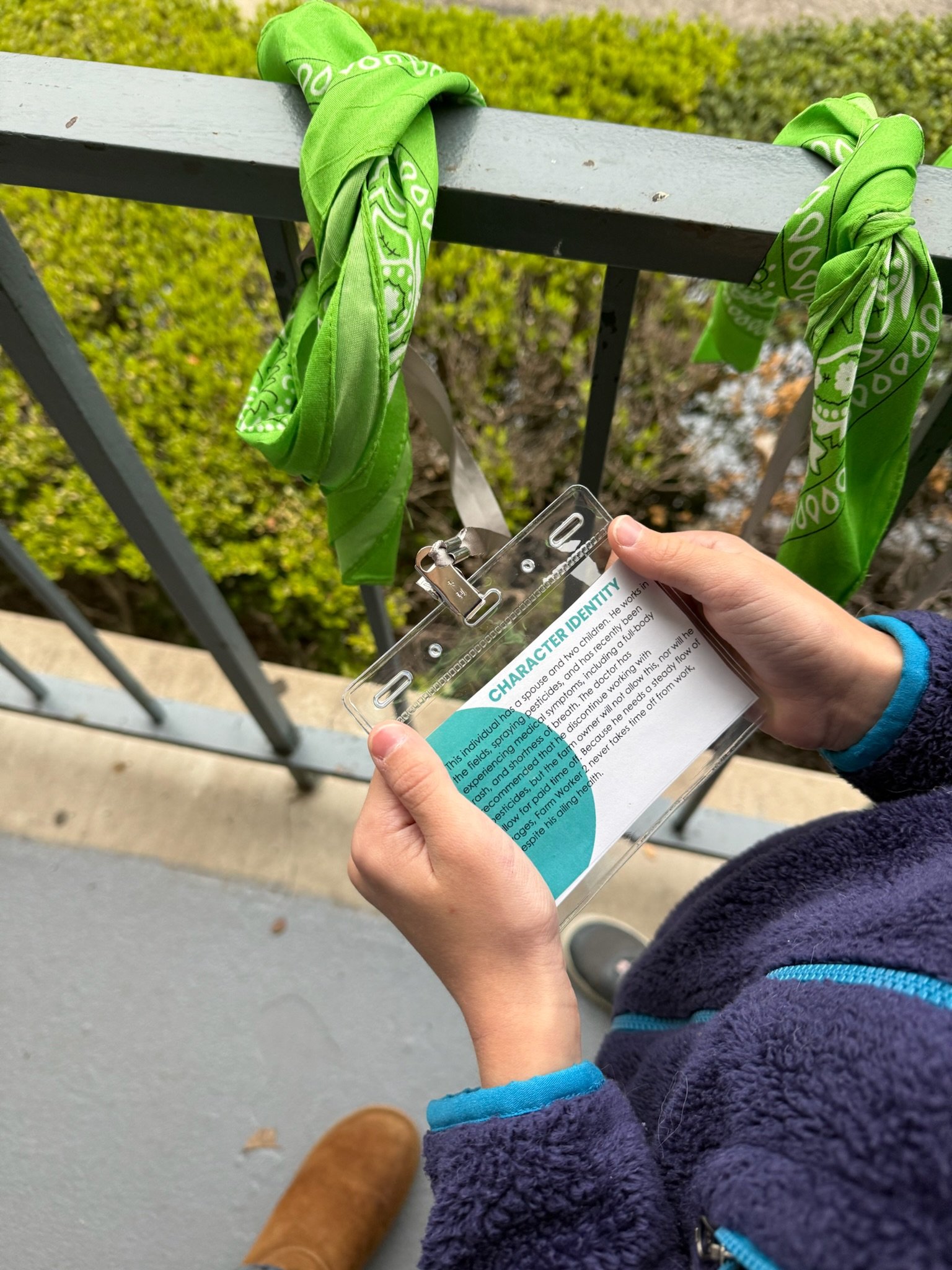
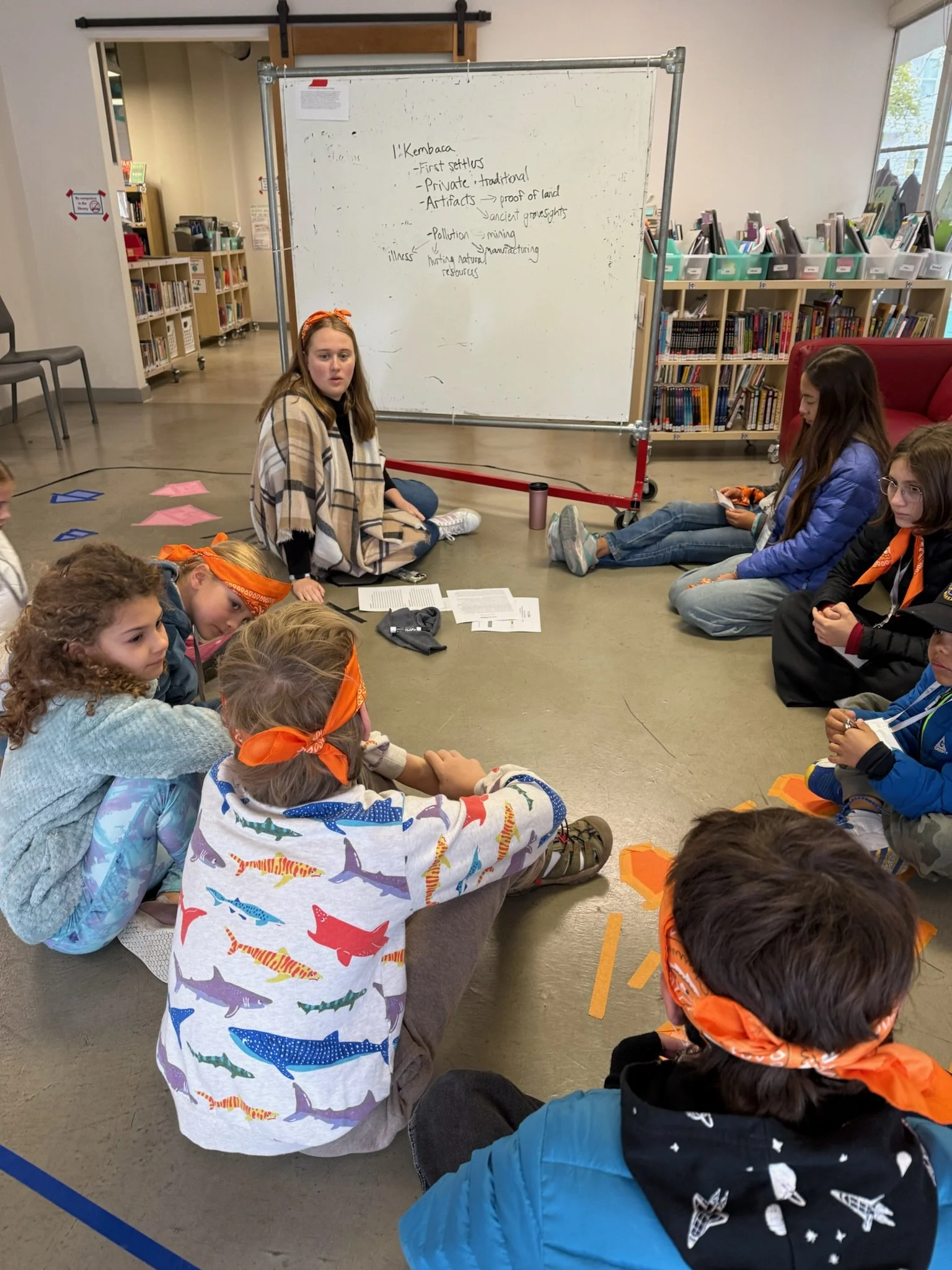
Build Week 20 positioned our whole community in a deep simulation immersed in the society of a utopian island called Jadelkembaca, also known as the Isle of Jade. A history of the island and a review of the map of the island launched us into our first day, as well as each child being assigned a character with a complex identity and allegiance to a particular “sector” on the island and geographical location (Ex. “The manufacturing workers are a community of industrial laborers who live in the Northeast region of Jadelkembaca Island. This manufacturing sector, among other things, produces equipment that will be used in the mines and agricultural sector. The factories are owned by two people…).”
Soon a series of conflicts complexified the situation—the teachers read aloud a series of twelve conflicts, which sparked discussions and ultimately produced chaos. Conflict situations related to regulation of commerce, to acquisition of land, to public vs private resources and more. It became crystal clear, as Maddie said, that we needed a “stable government” and laws to live in peace and rectify today’s (as well as future) conflicts.
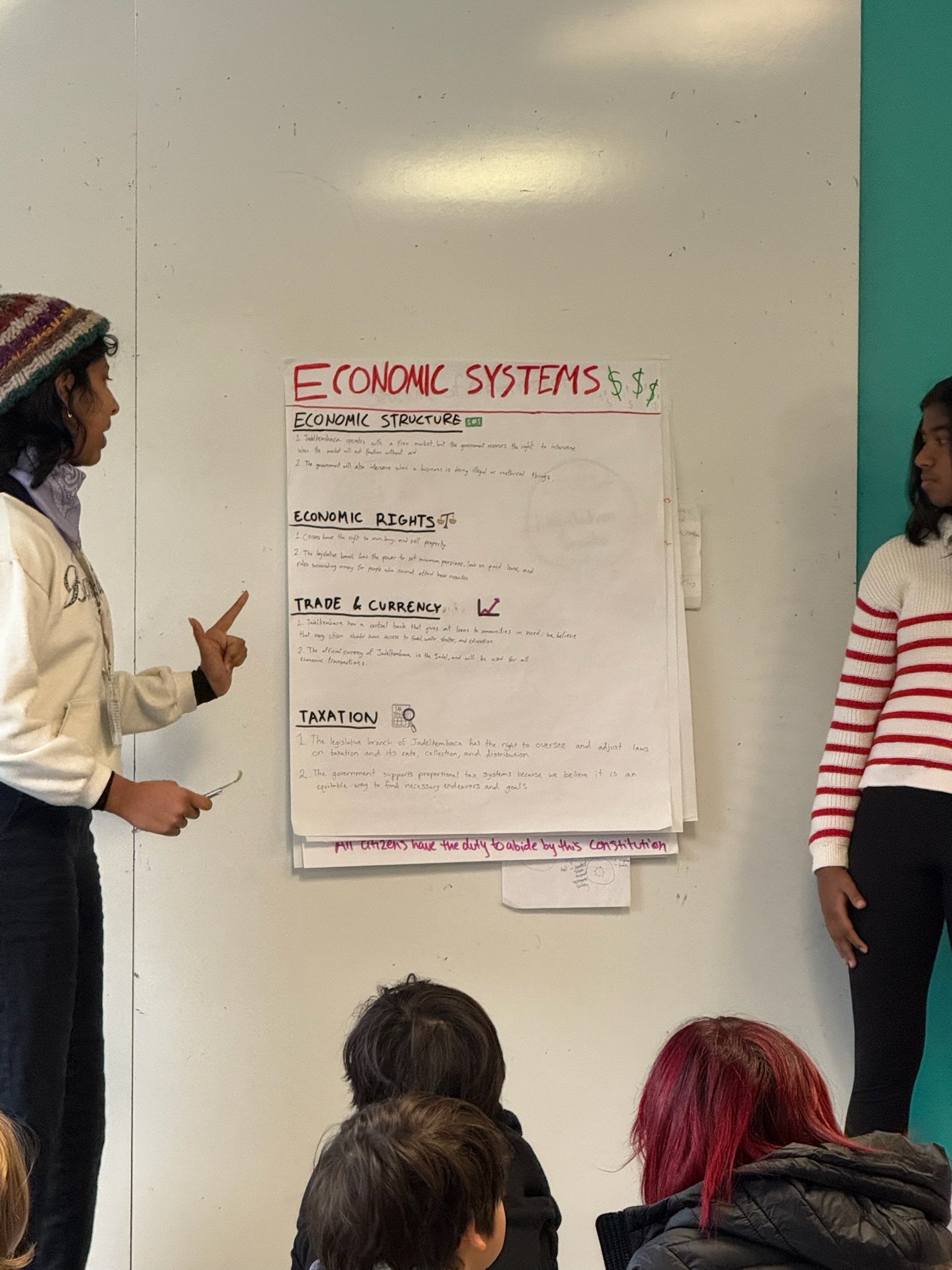
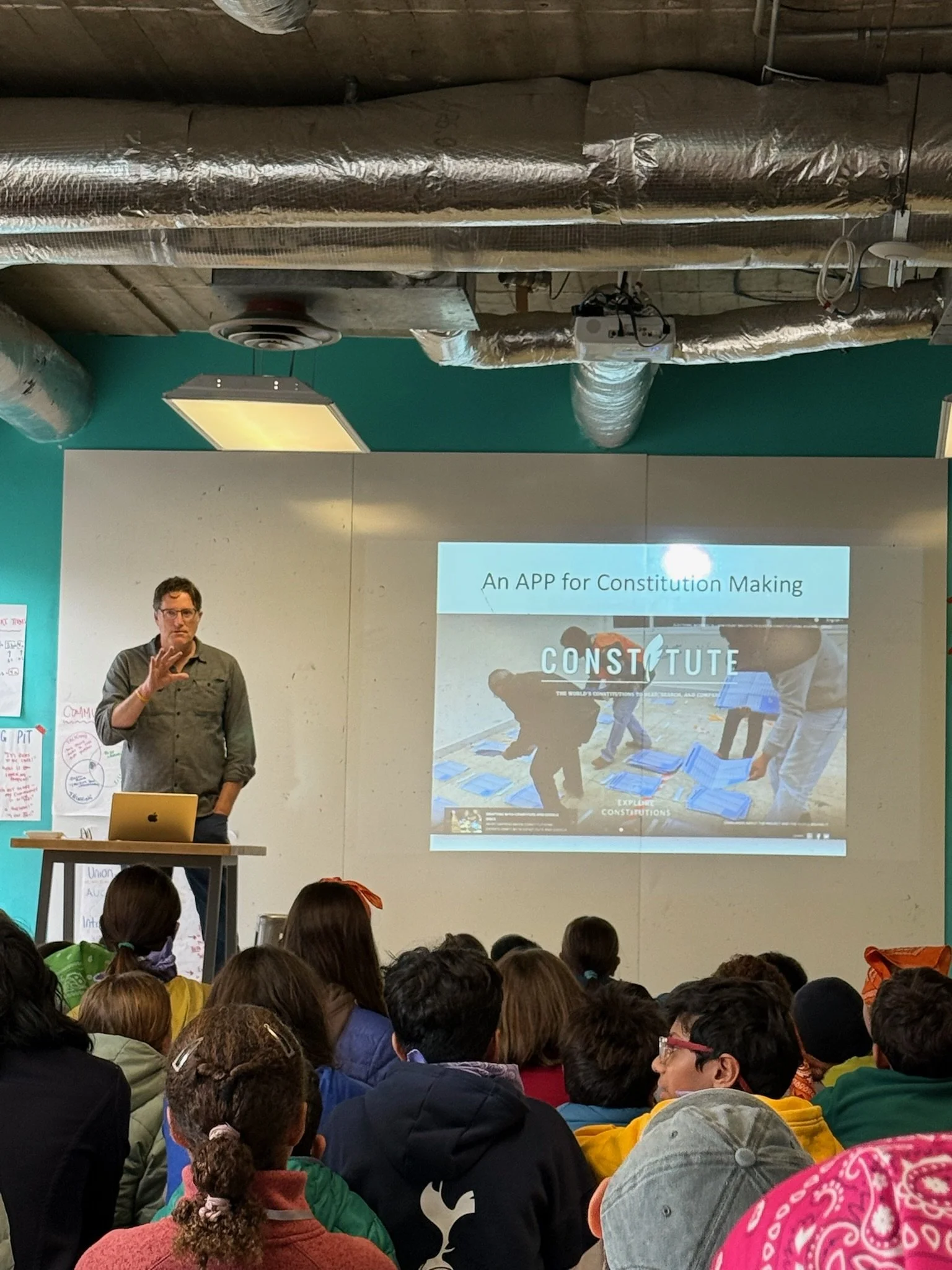
We were then visited by Dr. Zach Elkins, a government professor at UT whose research focuses on issues of democracy, institutional reform, and national identity. Dr. Elkins also directs the Comparative Constitutions Project to understand the causes and consequences of constitutional choices. He spoke to us for about an hour and helped us understand what we needed to do next for Jadelkembaca was to write a constitution. He informed us that, believe it or not, about 5 constitutions are written and 20-30 are amended or revised each year. Thus, although constitutional drafting is happening all the time, none of us Jadelkembacians had any experience. Dr. Elkins helped us quickly learn more by highlighting several important things to consider. He also suggested an underlying structure for our constitution, which we used to break into committees: Culture & Identity, Economic Structure, Rights & Duties, Structures of Government, and Principles & Symbols.
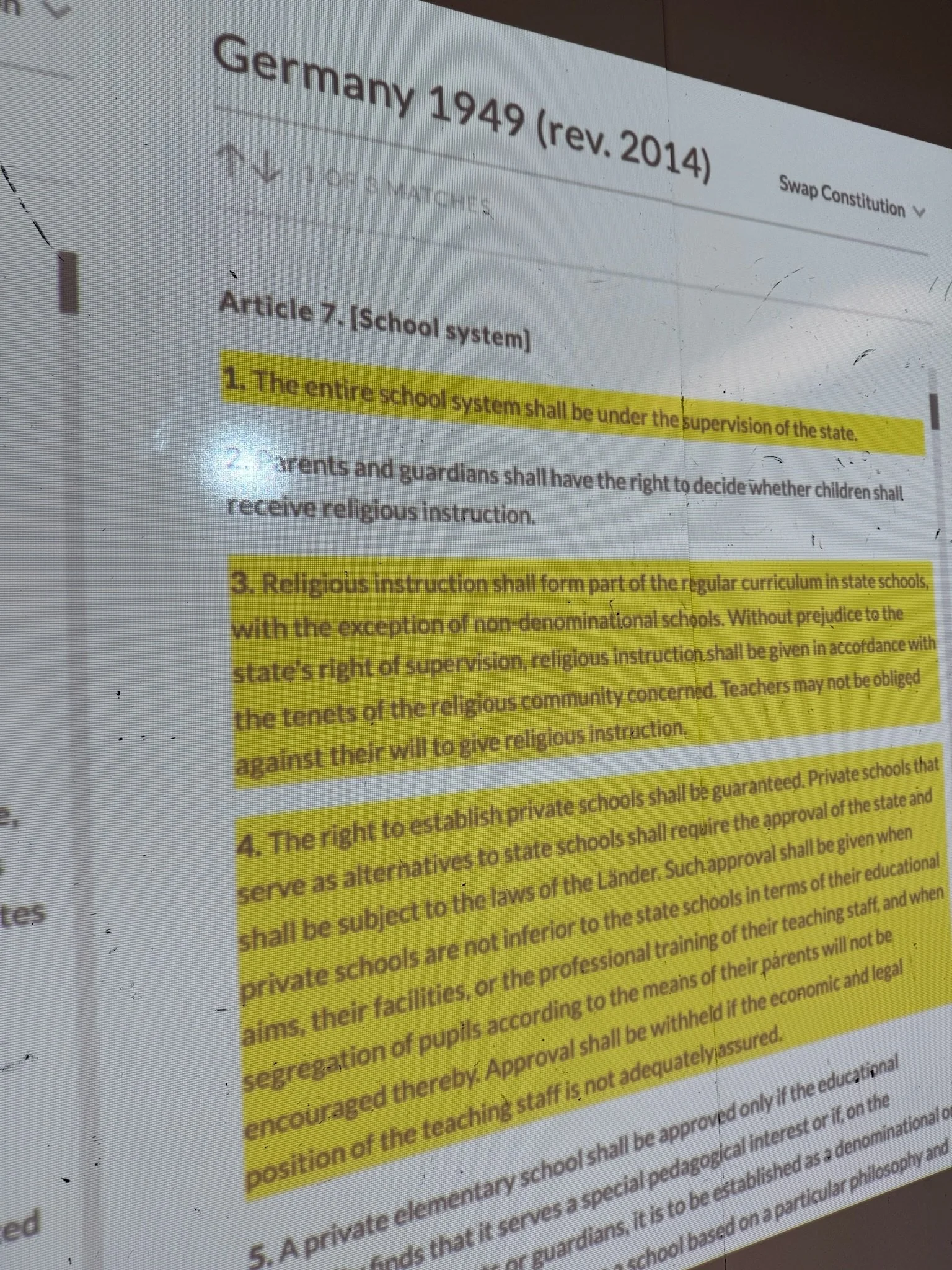
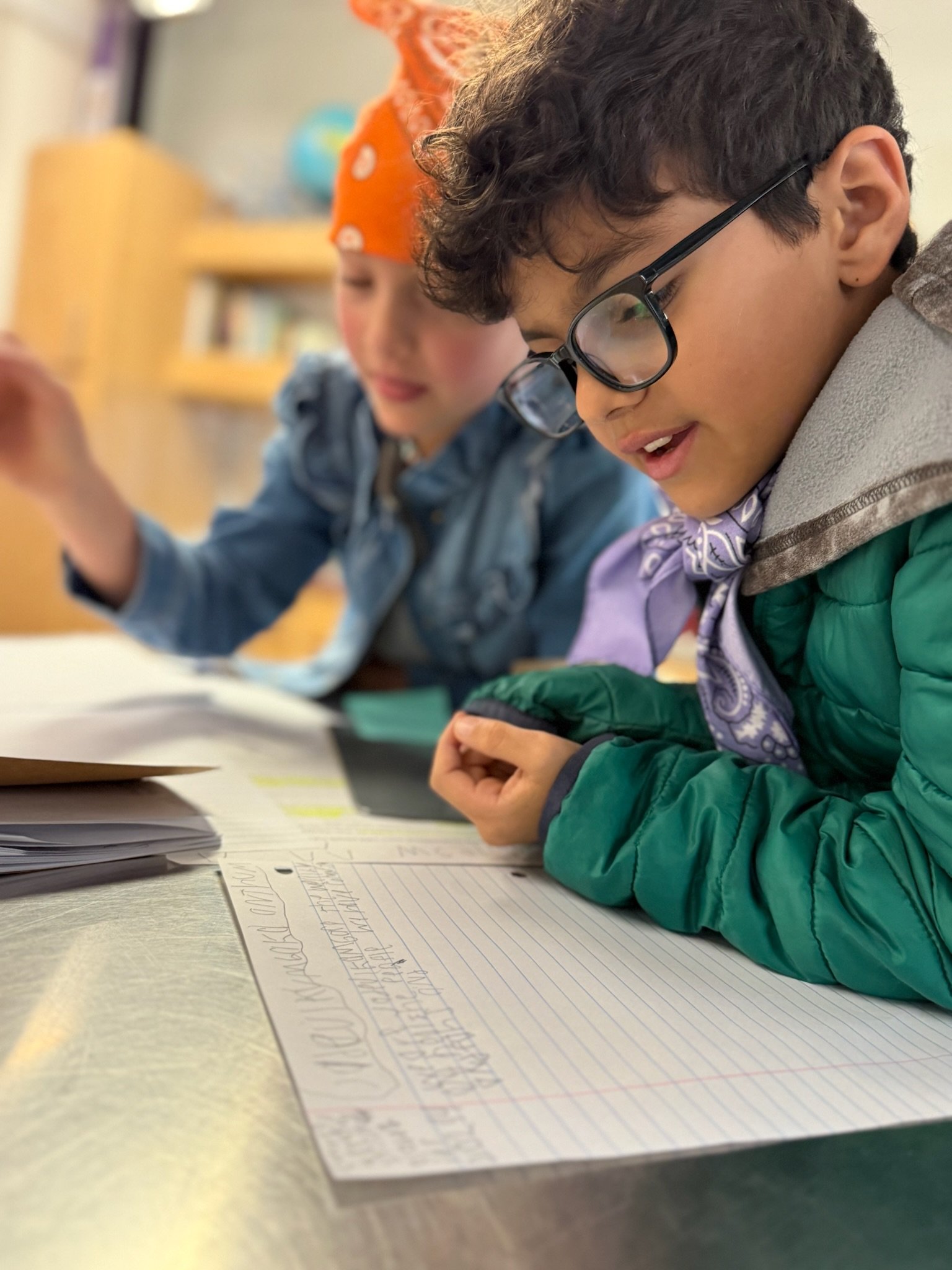
Next, we moved into a research phase, working to understand questions such as: What is a constitution? What is different about a constitution from a set of laws? How would a constitution ultimately be agreed upon? Additionally, we read through a number of constitutions and used these primary sources as a way to understand what a particular country seems to value.
Using Constitute Project, a website created by Dr. Elkins and his colleagues, we reviewed select constitutions and looked deeply at certain topics. Constitute Project is indexed by topic (ex. Rights & Duties, Regulation & Oversight, Legislative) and can be searched using filters (ex. ‘environment’ or ‘natural rights’). During this research phase, each committee began to discuss, debate, and try to decide upon key issues. With a cyclical debate protocol, we worked to create consensus among all committees and all sectors.
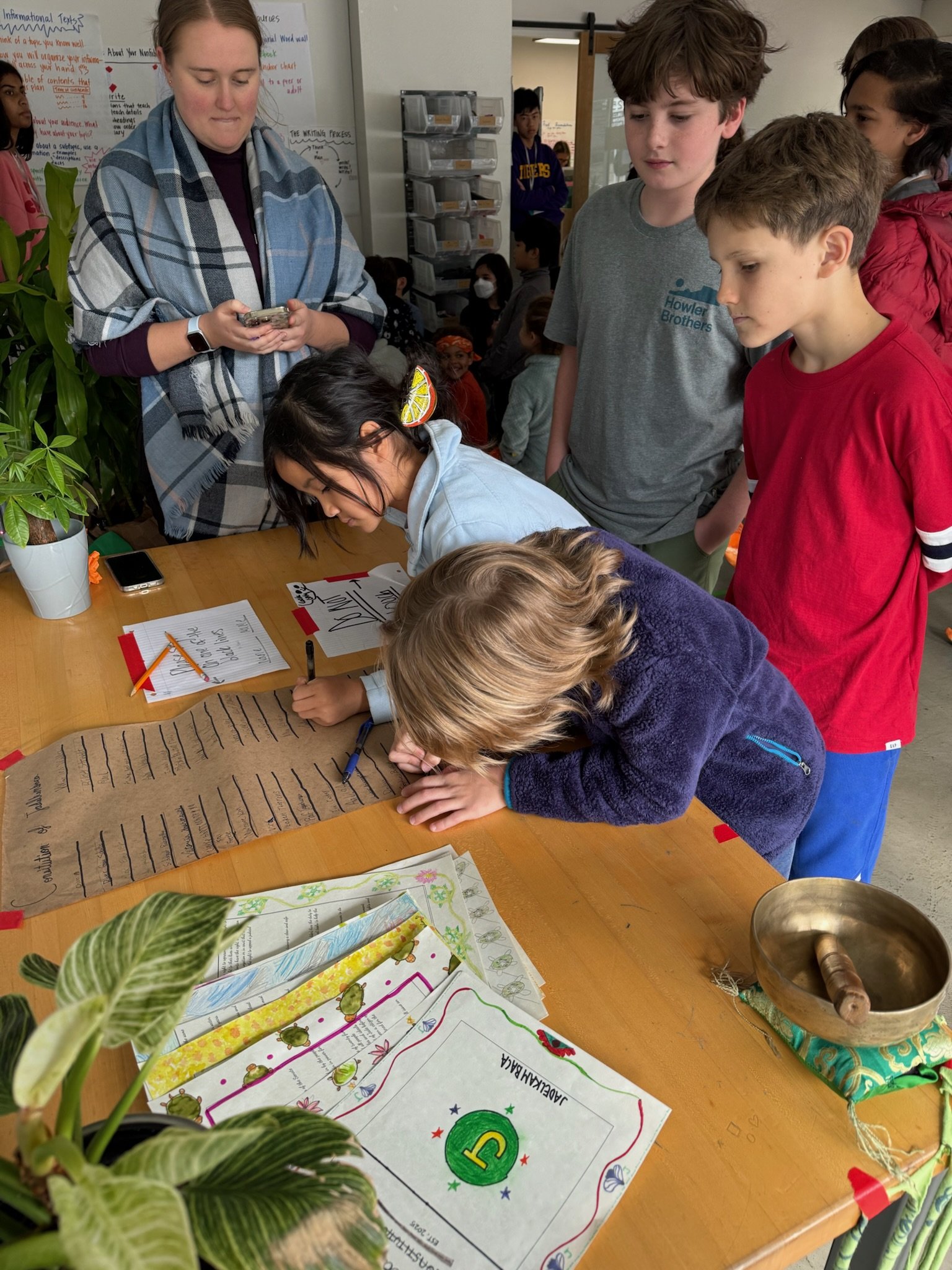
With this new information in hand, we launched into drafting, with each committee ultimately adding their work to the full constitution document. Of course, this surfaced a number of issues of non-coherence that required debate and rectification. Ultimately, we had to rely on what we called our “Madison Team” to revise the final document and work through the last thorny problems. While the Madison Team was hard at work, the rest of us joined one of three groups charged with: 1) planning for ratification, 2) learning more about constitutional art, or 3) preparing for the signing ceremony.
Ultimately, we ended the final day by ratifying our constitution and then debriefing on what we had learned across the week, talking about new interests that were sparked, and how we might do further reading or research to continue learning, especially as the United States tracks towards its 250th birthday next summer.
You can read the Constitution of Jadelkambaca here (easy to read version) or here (fancy, final version). You’ll also be able to view it on the Constitute Project in about a week. Once you do read the Jadelkambaca Constitution, you’ll have a sense of the hard work and fun we had during Build Week 20! Our Long-View kids are so amazing, and we were blown away by their camaraderie, critical thinking, and dedication to the week’s challenge.
A Note to Parents
Here are some ways you could continue this work at home:
This week we gained a deep understanding of the complex process of writing a constitution and bringing about consensus on complicated topics like economic systems, citizens’ rights, and natural resources. You might plan for ways you can help your child better contextualize this learning within the story of America.
Consider watching Ken Burns’ new documentary, The American Revolution, as a family. It was on PBS and is available on the PBS app.
Ask your child to bring home a book to read over the winter break related to the American Revolution. They can search our library catalog by “American Revolution” and will find a number of books at different reading levels.
If you have a middle schooler, commit to reading a relevant book alongside him or her.
>>Possible ideas are (these are just suggestions):
Founding Partisans: Hamilton, Madison, Jefferson, Adams and the Brawling Birth of American Politics by HW Brands
We the People: A History of the U.S. Constitution by Jill Lepore
The Gun, the Ship, and the Pen: Warfare, Constitutions, and the Making of the Modern World by Linda Colley
***We plan to hold a discussion of these books in early February for those who choose to read one of them.
Go back to the Google Classroom we used this week. Look through any interesting materials, or focus on the section entitled “US Constitution."
Help your child continue to explore the Constitute Project.
For example, find the oldest constitution on Constitute and the newest…make sure you know where those two countries are located on a map.
Constitutions are full of different ways of doing things. Ecuador’s constitution, for example, grants rights to mother nature herself, allowing any person to bring a claim on her behalf. Egypt’s provides for a right to organ transplants. What other interesting examples of rights can you find?