Podcast Featuring Kevin Moore and Lisa Zapalac: What does an extraordinary education look like for every student?
Yesterday Kevin Moore and Lisa Zapalac sat down with education podcast “The Hummingbird Stories” to talk more about Long-View and the assumptions that drive an extraordinary education for every learner. The Hummingbird Stories hosts conversations with the most innovative, equity-minded leaders in education from all across the country. Lisa and Kevin were a part of Season 2 of The Hummingbird Stories, in which the hosts asked the question: What does an extraordinary education look like for every student? Listen to the podcast here.
Read More
Unit Zero: What Do Scientists Do?
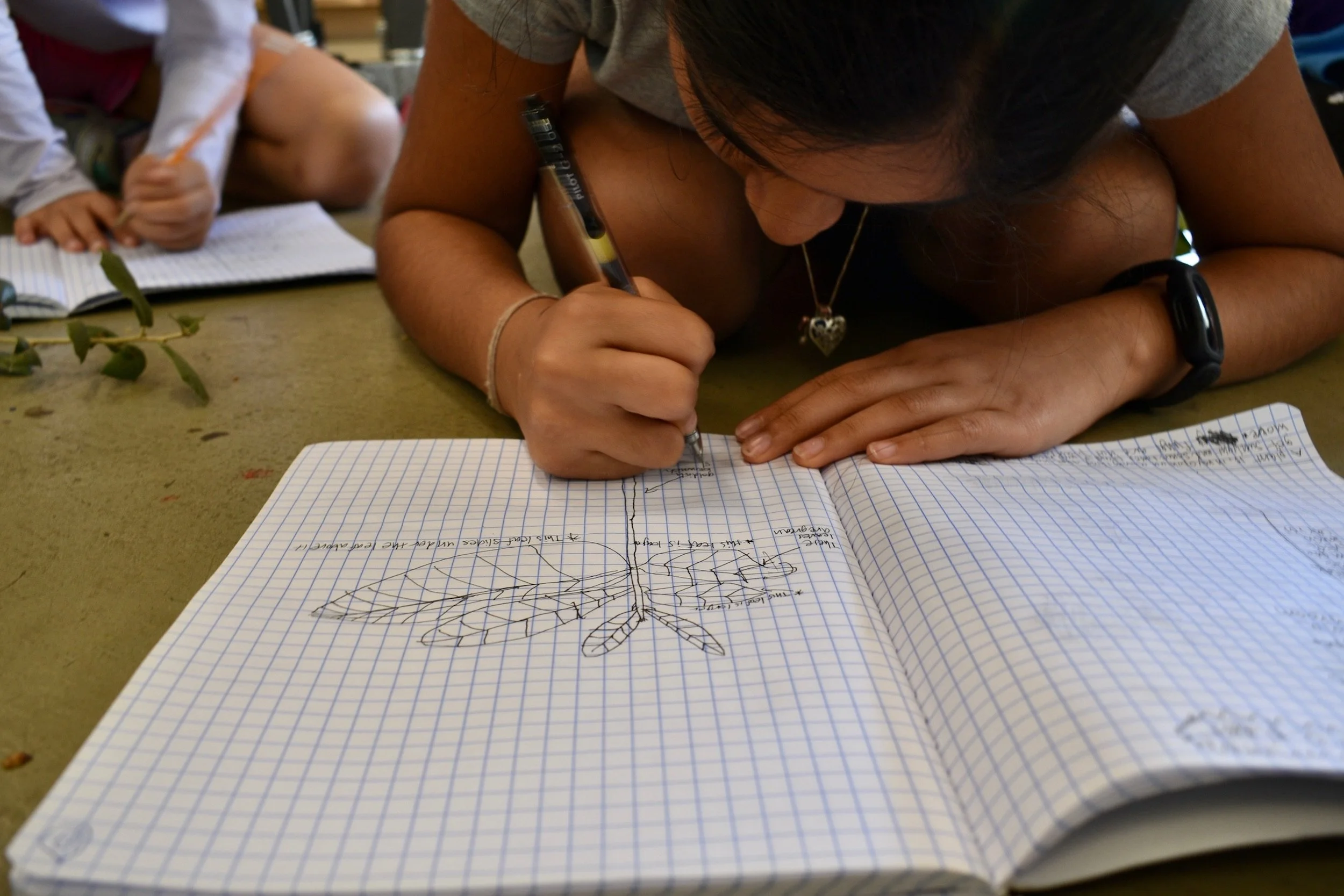
One day in September, a perplexing set of objects awaited Violet and Aqua Band learners in Science Block. Simply described, they were cardboard tubes with the ends blocked off by duct tape, and with four strings protruding from small holes in the sides. When learners pulled the four strings, however, surprises ensued. The four strings didn’t react as one might have expected. Inside the tubes, where no one could see it, a mysterious mechanism governed the action of the strings. What was it?
Over the next week or two, the learners investigated, working in small collaborative groups. They turned the tubes over and around….
Read More
Long-View Recognized as Leader in School Innovation
At Long-View we work hard to impact the world of education, not just for the children and families we serve at our micro school, but across the world. We have a particular area of expertise and innovation in the discipline of mathematics, and our math team has worked hard to spread our approach to educators across the country. And recently, we were nationally recognized (twice!) as a leader in school innovation by Transcend, a national nonprofit that supports school communities to create and spread extraordinary, equitable learning environments. At Long-View, we have been hosting visiting schools and leaders from Transcend since 2017, and are proud to be recognized by them in The Innovative Models Exchange and in The Canopy Project….
Read More
Kaylie White and Kevin Moore Discuss Long-View’s Math on Podcast, “The Art of Teaching and Learning”
Several weeks ago Kaylie White and Kevin Moore were interviewed by “The Art of Teaching and Learning Podcast” (Classical Education). In the podcast, which strives to podcast promote learning about the tradition of a liberal arts education, Adrienne and Trae, the hosts, interview Kevin and Kaylie to learn more about how our math team at Long-View constructs classrooms where learners experience math as a discipline that is engaging, interesting, and helps students learn thinking and communication skills. Listen to the podcast here.
Read More
Building Culture for a New Year
After a summer of exciting work with colleagues from Long-View and other educators from beyond, some invigorating sessions of Open Math, and some down time too, we’re now fully immersed in our new year at the micro school.
We kicked things off with Launch Camp, when our newest learners spent two days diving right in to the Long-View way of life – building pendulums from scratch to learn about momentum (and collaboration), choosing the first just-right books for their personal book bins (and understanding that THEY are taking charge of their reading lives), and even figuring out how much is too much in one’s backpack on the walk to the park at lunch time (while realizing that the adults at Long-View trust them to manage all of these details)….
Read More
Learning for the Long-View
It's time to start Learning for the Long-View. We wanted to share an exciting project we have been working on this summer. We have created a new platform to support educators (and interested parents!) called “Learning for the Long-View.”
Learning for the Long-View is a subscription-based website focused on elevating learning and transforming thinking in mathematics. Members will have access to a dynamic library of videos, guides, graphics, scripts, as well as weekly chats and live events with the Long-View team. This is all in addition to weekly lesson plans.
Our math team is continuously working to spread the Long-View approach. In this new web platform, subscribers have an innovative way to develop content knowledge for the teaching of mathematics, while also exploring how advanced pedagogy can elevate and impact learning….
Read More
Two Hundred Years of Pedagogical Thinking: Amber Band Explores Theories of Education
Where does the Long-View model come from, in terms of its theoretical orientation? How does it compare to other educational experiences? Since Winter Break, Amber Band – generally, this year’s oldest group of Long-View learners – has considered these questions and more as a part of a sustained inquiry into pedagogical models in Literacy Block. Dr. Flider, who leads Amber Band in Literacy, described the goals of the unit, saying “the idea here is to really give the learners an intimate sense of the educational project that is Long-View and the way that it truly is informed by two hundred years of pedagogical thinking. I also want them to be more informed "consumers of education" as they move into high school and college.”
In service of these goals, learners have listened to their teachers describe their own formative experiences in the “Educators on Education” interview series; read theories of education by writers from Bronson Alcott to Paulo Freire; debated each other over best practices; and conducted their own research into areas of interest in this field.
Today’s post features the research writing of Amber Band learner Makhai Lee: “Education in the Juvenile Justice System.” We’ll examine several excerpts from Makhai’s essay (full text here)….
Read More
Awakening to Climate Change: A School-Wide Inquiry
She looked straight into my eyes and said, “Mr. Cooley, imagine if you heard people talking about climate change all the time – from adults, TV, etc. – but didn’t know what it was. How would you feel?”
Annelise, a learner in Emerald Band, spoke these words to her science teacher in March as they discussed her favorite moment of the year in a reflective interview. She continued, “I remember the moment when I “got” climate change. Before that I had realized that something was wrong, and heard about it on TV and radio, but didn’t understand it. I kind of felt left out of the conversation but now I actually figured out what it really means.” Annelise’s reflection speaks to the intense experience of growing up in a time when climate anxiety is omnipresent and talk of this complex situation is constant….
Read More
Our Assumptions and How They Create a Focus on LEARNING
At Long-View we are not trying to be another school or just “do school,” but rather we are working very purposefully to create an environment focused on learning.
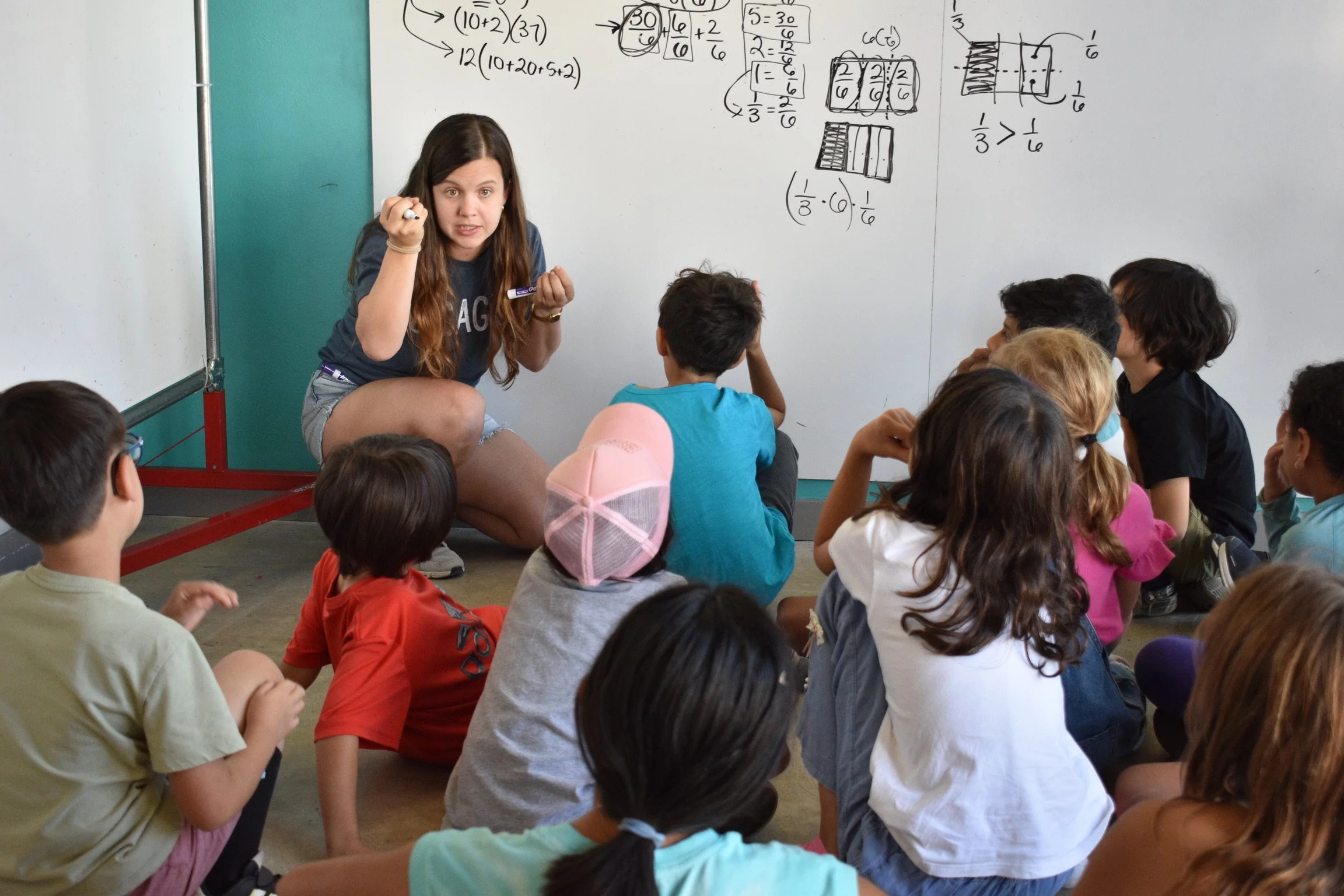
We define learning as constructing knowledge together. The most important part of our pedagogy is that we are reasoning together, trying to understand something together at a deep level. Everything we do works to create a culture centered around this idea. Rooted underneath that work and culture are the assumptions we make as we approach learning and teaching.
We assume children have significant capacity for understanding….
Read More
Mid-Year Conferences: Taking Stock and Looking Ahead
For the week before Winter Break, no learners whittled in the maker space, scribed on the whiteboards, or curled up with books in the library bean bags, but Long-View was busy nonetheless. The teachers of Long-View devoted the week to analyzing and sharing the work of our learners in mid-year conferences with their families. Along with artifact portfolios, conferences are one of the primary ways we document and communicate how children at Long-View learn.
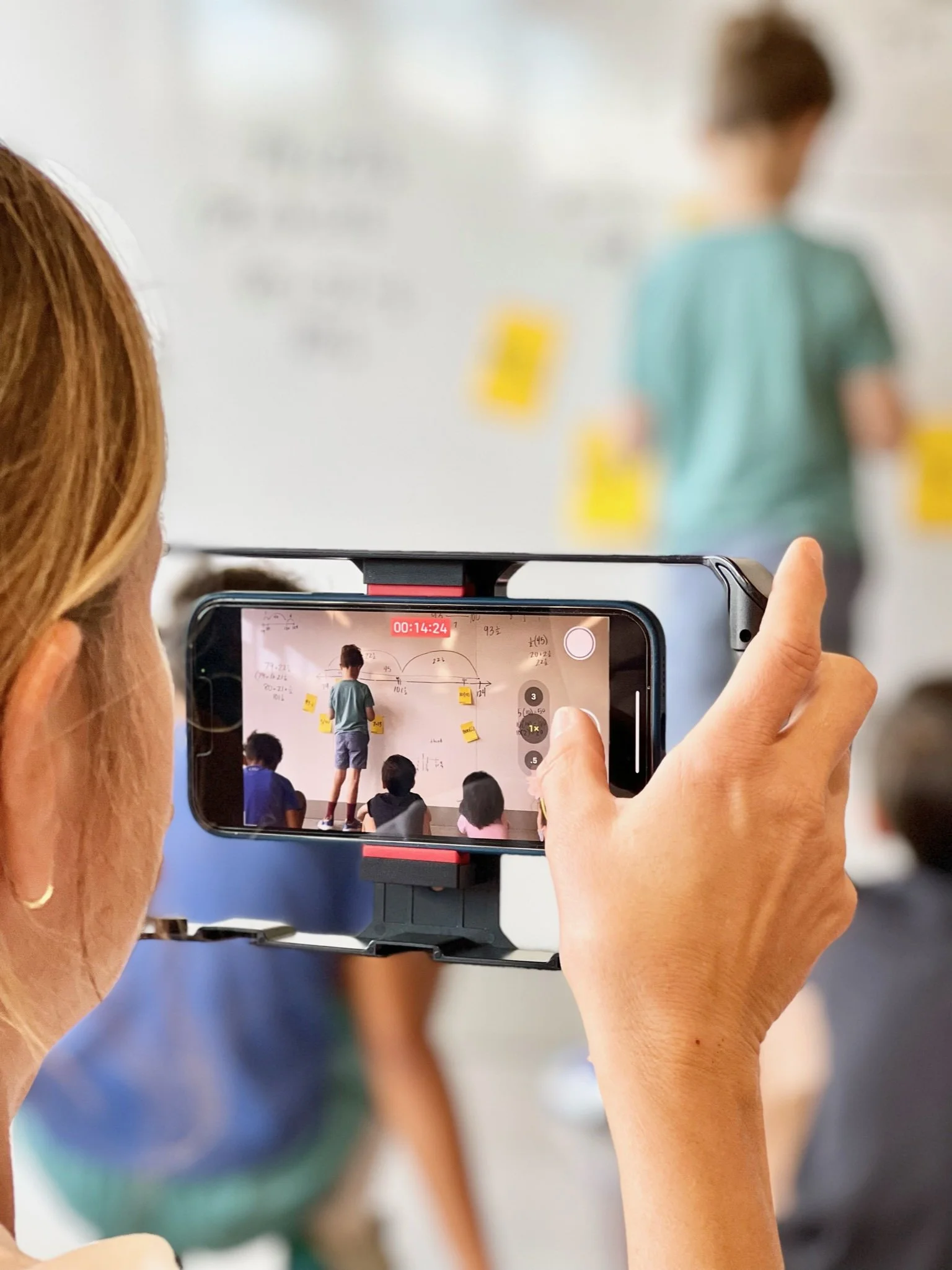
Throughout the year, Long-View teachers study learners to understand their progress and guide instruction. We think hard, and often collaboratively, about their work. We pay attention to daily behaviors and interactions, and often document particular moments and written products through photos and videos. These digital documents, and the written products themselves, are what we call artifacts of learning….
Read More